
Online Reputation Management

navigating political storms: essential online reputation management strategies for law firms

Navigating Political Storms: Essential Online Reputation Management Strategies for Law Firms

Navigating Political Storms: Essential Online Reputation Strategies for Law Firms In recent days and weeks, law firms across the US have found themselves in unprecedented and tumultuous waters. The current administration\’s increasingly aggressive stance towards major law firms—characterized by specifically targeted executive orders and scrutiny of firms’ employment practices—has thrust the legal sector into the uncomfortable spotlight.  If they respond or push back, they risk raising the ire of the White House; if they compromise, they could lose their reputation to client’s and peers.  A critical lesson for all firms, unfortunately, is the necessity of developing a robust and proactive online reputation management (ORM) strategy. Law firms have historically built a reputation quietly through quality, discretion, and winning cases, eventually building trust and prestige. However, the current political climate has rapidly shifted away from this reality.  Recent governmental moves, including attempts to sanction firms deemed to engage in \’frivolous litigation\’ and extensive probes into diversity, equity, and inclusion programs, highlight incongruous new vulnerabilities that go beyond the courtroom and directly at public perceptions. The strategic response to this new environment requires firms to lean heavily into proactive online reputation management. Effective ORM creates a strong web presence that serves both as a anticipatory advocacy platform and a defensive barrier against political targeting and negative publicity. 1. Online Reputation Management for Law Firms: Enhancing Credibility Establishing a credible and trustworthy online presence is the foundation for legal reputation management. This begins with showcasing expertise, successful outcomes, and a clear commitment to being ethical. By actively sharing case wins, client testimonials, industry recognition, and community involvement, law firms can build public trust and online authority. Highlighting integrity reinforces confidence among clients and other firms, particularly during times of controversy or investigations that appear in Google search results. 2. Strategic Content Development for Legal Reputation Protection Creating and disseminating well-crafted content is one of the most powerful tools in online reputation management for law firms. This includes case studies, client success stories, thought leadership articles, presentations, and whitepapers that demonstrate the firm’s knowledge and professionalism.  For example, a law firm focused on the hedge fund industry was targeted by a false report online. By producing and distributing high-quality financial-related content, and optimizing SEO on key platforms, the negative link was suppressed within four months. This highlights how strategic content can control the narrative and neutralize harmful online attacks. 3. Transparency and Compliance: Safeguarding Your Law Firm\’s Online Reputation Public trust is built on this kind of transparency, and for law firms, detailed compliance with legal and ethical standards should be disseminated online. Proactively sharing these compliance efforts, ethical policies, and broader initiatives communicates openness and reliability, which are key for building an online reputation. When scrutiny comes up, these standards serve as proof of responsible governance. Transparency transforms potential vulnerabilities into strength, showing clients and regulators that a firm is accountable, ethical, and trustworthy. 4. Thought Leadership: Elevating Legal Reputation Online Establishing a reputation as a thought leader can significantly elevate a law firm’s online standing. Contributing expert insights on legal and regulatory developments, engaging in high-level industry discussions, and participating in public forums builds authority and influence. Firms that consistently share their perspectives on complex legal issues signal depth, competence, and leadership. This not only improves online search visibility but also positions the firm as a reliable voice during turbulent times. In the current politically charged environment, online reputation management for law firms is no longer optional—it is a critical strategic imperative. Firms that proactively implement comprehensive ORM strategies will protect their reputations, sustain trust, and maintain resilience amid unprecedented political challenges.
Navigating Political Storms: Essential Online Reputation Management Strategies for Law Firms Read More »

online reputation ceos recover reputation

Beyond First Impressions: The Critical Role of Online Reputation for CEOs

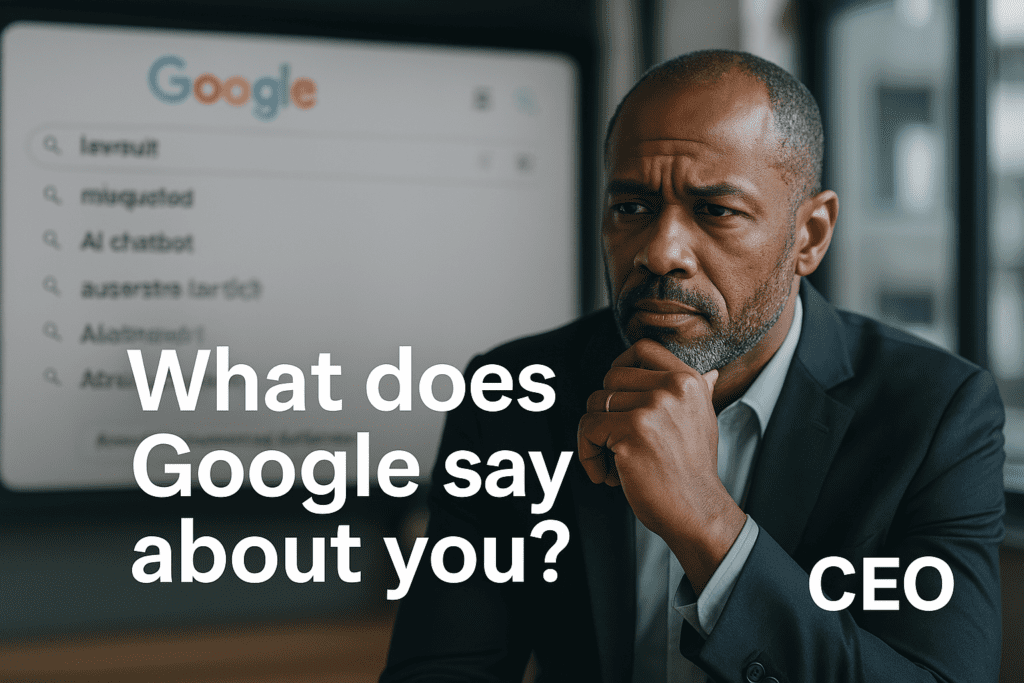
A few months ago, I met with a CEO who built a million-dollar company from the ground up. Smart, respected, trusted by his team. But when you Googled his name? You’d never know it. Instead of achievements, the top results were a years-old lawsuit (dismissed), a misquoted article, and a surprisingly off-base summary from an AI chatbot. He looked at me and said, “This isn’t who I am—but it’s what people see before I even speak.” That’s the reality today. Reputations are not shaped just by what we say or do, but by what Google and algorithms decide to show. And for CEOs, the stakes are even higher—investors, talent, partners, and the public are all forming first impressions before you ever enter the room. Online reputation management isn’t about vanity. It’s about trust and making sure leadership, values, and CEO voice come through clearly online that often misrepresents. Taking Back Control: How CEOs Can Reclaim Their Web Presence We helped that CEO reclaim his narrative. Not by spinning stories, but by telling the real one—amplifying leadership, correcting misinformation, and building a web presence that genuinely reflects who he is. We started by proactively correcting inaccurate AI-generated content through strategic outreach and updating information across platforms, such as LinkedIn, their websites, Crunchbase, etc. We then created and distributed high-quality, authentic content that highlighted true achievements and leadership qualities. Finally, we consistently monitored online mentions and engaged thoughtfully to maintain and further solidify his credible online presence over months. Because when you\’re leading a company, your reputation isn’t just personal—it’s foundational. What does the internet say about you when you\’re not in the room?

Beyond First Impressions: The Critical Role of Online Reputation for CEOs Read More »

The Ultimate Guide to Online Reputation Management for CEOs in 2025

In the current digital landscape, a CEO’s reputation is more than just a public image—it is a critical asset that influences investor confidence, employee engagement, customer loyalty, and the overall market perception of your company. In 2025, managing your online reputation with care and strategic insight has never been more essential. This guide is crafted specifically for CEOs who want to protect and enhance their online presence. At Recover Reputation, we’re dedicated to equipping top executives with practical strategies to build a positive online persona that helps withstand the rapidly changing digital environment. Summary Critical Impact: A CEO\’s online reputation directly influences investor confidence, employee morale, customer loyalty, and crisis management. Audit & Monitoring: Regularly audit and continuously monitor your digital footprint to quickly identify and address issues. Proactive Content Strategies: Build credibility through thought leadership, authentic storytelling, consistent branding, and active audience engagement. Crisis Management: Implement swift, honest responses and leverage expert support to manage and mitigate negative incidents. Social Media Engagement: Use social media audits, media training, and employee advocacy to enhance and protect your public image. Leveraging Technology: Embrace AI-driven insights, big data analytics, and personalized strategies to proactively manage and correct online content. Tailored Solutions: Recover Reputation offers customized plans that build a positive AI presence, correct harmful content, and strategically suppress negative search results. Why Online Reputation Management Matters A CEO’s online reputation can be a game changer. In an era where information is instantly accessible and opinions spread immediately, the reputation surrounding a leader can impact: Investor Confidence: A strong reputation reassures investors and stabilizes market perceptions.   Employee Morale: Trust in leadership is paramount for attracting and retaining top talent. Customer Loyalty: A positive internet presence fosters enduring relationships with customers/clients. Crisis Preparedness: Proactive management can turn a potential crisis into an opportunity for demonstrating authentic leadership. Understanding these factors is the first step in safeguarding your executive presence online. Auditing and Monitoring Your Digital Footprint Before you can enhance your reputation, you need a clear picture of your current online presence. Here’s how to get started: Conduct a Comprehensive Audit:Use monitoring tools and manual searches to compile every digital mention—be it news articles, social media posts, or blog mentions. List both positive and negative references. Establish Continuous Monitoring:Set up automated Google alerts and regular reporting schedules. This ongoing process allows you to respond quickly to emerging issues and opportunities. Analyze and Prioritize:Determine which aspects of your web reputation needs immediate attention and which can be developed through improvements over time. Focus on the areas that have the greatest impact on public perception. Ready to Regain Control of Your Online Reputation? Get in touch with us today for a free consultation. Let\’s work together to restore your online reputation and get your life back on track. Please enable JavaScript in your browser to complete this form.Name *Phone Number *Email *MessageEmail Submit Proactive Strategies for a Positive Online Presence Building a robust online reputation starts with proactive measures. Consider these strategies: Content Leadership:Share your insights on industry trends, leadership challenges, and innovative solutions through articles, interviews, and podcasts. Position yourself as an authoritative voice in your field. Personal Storytelling:Authenticity resonates. Share personal experiences and lessons learned. This humanizes your brand and builds trust. Consistent Branding:Ensure that all your online profiles—from your company website to social media—reflect a cohesive and professional image. Consistency reinforces your leadership narrative. Engagement and Transparency:Regularly engage with your audience. Whether it’s through thoughtful social media posts or responding to feedback, open communication reinforces credibility. Effective Crisis Management and Damage Control No matter how robust your strategy, crises may arise. Here’s how to manage them effectively: Swift, Honest Response:Address negative incidents promptly. Acknowledge the issue and communicate the steps you’re taking to resolve it. Transparency can often mitigate damage. Leverage Expert Support:Collaborate with trusted reputation management experts. Their guidance can help steer your response and maintain trust. Plan Ahead:Develop and rehearse crisis management protocols. A well-prepared plan can turn a challenging situation into a demonstration of strong, decisive leadership. Leveraging Social Media for Reputation Enhancement Social media is an essential tool for shaping your online reputation. Here are five key tips: Audit Regularly:Keep your profiles up to date with current achievements and professional milestones. Authentic Engagement:Share thoughtful content and engage in meaningful conversations. Genuine interactions can greatly enhance your public image. Invest in Training:Media training can help you communicate effectively and confidently, ensuring your message is clear and consistent. Monitor Feedback:Utilize social listening tools to track what is being said about you online. This enables you to address any issues promptly. Promote Employee Advocacy:Encourage your team to share positive stories about your leadership. Their testimonials can be a powerful endorsement of your reputation.   Embracing New Trends: AI, Big Data, and Personalization Technology continues to reshape how reputation management is conducted. Staying ahead means embracing: AI-Driven Insights:Advanced analytics can predict trends and identify potential issues before they become critical. Big Data:Leverage comprehensive data sets to understand audience sentiment and tailor your messaging. Personalization:Customize your approach to different stakeholder groups. Whether it\’s investors, employees, or customers, a personalized touch can make all the difference. Content Correction:In an era of misinformation, using technology to quickly correct inaccuracies is essential for maintaining a credible digital presence. Recover Reputation’s Unique Approach At Recover Reputation, we combine cutting-edge technology with personalized service to help CEOs protect and enhance their online image. Our approach includes: Positive AI Presence Building:We deploy advanced tools that not only monitor but actively promote positive, accurate content about you. Error Correction:Our team identifies and corrects misleading or harmful content swiftly, ensuring that your digital footprint remains pristine. Strategic Content Suppression:Through smart SEO techniques and content strategies, we work to ensure that negative results are pushed down in search rankings. Tailored, Continuous Support:Every CEO is unique. We create custom reputation management plans that address your specific challenges and opportunities, keeping you ahead of the digital curve. Conclusion and Next Steps Your online reputation is an invaluable asset that demands constant attention and proactive

The Ultimate Guide to Online Reputation Management for CEOs in 2025 Read More »

Building Trust Online: Reputation Management for Therapists and Psychoanalysts

Presentation Summary This presentation explains the importance of managing online reputation for therapists and psychoanalysts. It highlights how negative posts, especially from former clients, can harm credibility, and offers practical strategies to reclaim control by publishing positive, expert content. As a therapist or psychoanalyst, trust is the foundation of your practice. Potential clients often form their first impressions based solely on what they find online. One negative review—or even worse, critical posts from ex-patients—can cast a shadow over all the hard work put into your practice. Unfortunately, a single unfavorable comment or a misunderstood post from a former client ends up at the top of search results, making it seem like your reputation is tarnished. It’s disheartening when your genuine care and expertise get overshadowed by online negativity. One effective strategy is to create and share positive, high-quality content that reflects your true professional identity. Write articles or blog posts that highlight your expertise, share success stories (while maintaining confidentiality, of course), and offer practical advice on mental health topics. By consistently publishing thoughtful content, you not only provide valuable information to those who are searching for help but also help push down the negative posts in search rankings. In the end, your online reputation doesn’t have to be defined by a few negative posts. With a steady stream of positive, expert content, you can reshape the narrative and ensure that your online image truly reflects the quality care you offer. Powered By EmbedPress

Building Trust Online: Reputation Management for Therapists and Psychoanalysts Read More »

Scarlett Johansson, Deepfakes, and the Fight for Online Reputation Protection

The recent controversy surrounding UK’s Channel 4 documentary Vicky Pattison: My Deepfake Sex Tape highlights a troubling intersection between AI-generated content, consent, and online reputation damage.  By including deepfaked imagery of Scarlett Johansson in lingerie—without her consent—Channel 4 may have not only crossed ethical boundaries but potentially violated a UK law. Legal experts argue that even in a documentary meant to raise awareness, broadcasting nonconsensual AI-generated imagery risks amplifying the very harm it is meant to highlight and expose. AI, Consent, and Ethical Boundaries in Media The growing accessibility and variety of AI tools has made it easier than ever to create hyper-realistic false images, videos and audio. Exposing this in a documentary certainly raises awareness, yet there are ethical implications of using non consensual deepfakes. This case raises questions about where to draw the line between responsible journalism and unintentionally perpetuating the harm caused by deepfake abuse? Scarlett Johansson’s Long Battle Against Deepfake Exploitation Scarlett Johansson has been outspoken against deepfakes since 2018, calling them \”demeaning\” and warning of the lack of control over one’s own image. Despite this, her image was again used to exacerbate the very issue she fought against. Johansson was among the first celebrities to experience deepfake sexual abuse, and this repeated use probably underscores how little progress has been made in protecting people from AI-generated harm. The Reputation Crisis: How AI-Generated Content Harms Individuals From an online reputation management standpoint, this underscores a growing crisis. Individuals—celebrities and everyday people—are increasingly vulnerable to AI-generated images, videos, and other reproductions. Once shared, these manipulated media can cause lasting online damage that is difficult to repair, and might be impossible to remove. This extends beyond celebrities; deepfake technology is now being weaponized against private individuals, leading to reputational harm, harassment, and emotional distress. The Need for Stronger Protections and Accountability in AI Development As tools become more sophisticated, there is a need for stronger protections against AI-generated abuse. While it is certainly laudable to raise awareness, this approach can normalize or even amplify the damage caused by deepfakes and related reproductions. Instead, perhaps the focus should be on accountability—stressing that platforms, AI developers, and lawmakers create stricter regulations to prevent the unauthorized use of someone’s likeness. Beyond PR: Safeguarding Identity in the Age of AI Fabrication This issue serves a reminder that managing and protecting online reputations goes beyond traditional PR—it’s about safeguarding identity, dignity, and personal security where AI can seemingly fabricate reality. As legal discussions evolve, it’s clear that media outlets, content creators, and technology companies must be held accountable, at least partially, for their role in preventing the spread of AI-generated exploitation. Awareness alone is not enough; real action is needed to prevent further violations of digital identity and personal autonomy.

Scarlett Johansson, Deepfakes, and the Fight for Online Reputation Protection Read More »

Connection Between Online Reputation Management and ChatGPT: What You Need to Know

Summary New Frontier: Online Reputation Management (ORM) is now directly linked to Generative AI, as tools like ChatGPT pull data from the web, often amplifying misinformation. Audience Focus: Designed for CEOs, business leaders, and organizations managing reputational risks in an AI-driven world. Proactive Approach: By combining ORM with AI refinement, organizations can stay ahead of misinformation, protect credibility, and build trust. Empowering Innovation: Strengthening web presence and refining AI systems ensures more accurate and reliable outputs while empowering businesses and communities. Why It Matters: This innovative strategy bridges ORM with AI solutions to address challenges faster, smarter, and with a forward-looking perspective.   Crucial Link Between Online Reputation Management and Generative AI Generative AI tools like ChatGPT and Gemini are transforming how information is created and shared, but they also reveal a crucial connection to online reputation management (ORM). Importantly, more people are beginning to turn away Google as the sole research tool and are using ChatGPT and similar AI systems. A significant source of AI misinformation often stems from incorrect or false information that is already present on the internet. This makes sense—many tools, like ChatGPT, rely on search engines such as Bing and Google for real-time data. Consequently, these tools can unintentionally amplify false narratives, harm reputations, and disproportionately impact vulnerable communities. In essence, a new and critical link has emerged between ORM and AI, highlighting the need for proactive strategies to manage misinformation at its source. How ChatGPT Challenges Google—and Why It Matters to You ChatGPT is quickly positioning itself as a competitor to Google. Instead of providing a list of links, it delivers direct, conversational answers tailored to users’ questions, making it a time-saving and intuitive alternative (I personally hardly use Google anymore, and I suspect others are doing the same). This shift raises important questions about how AI impacts everyday life. For the average user, it’s a reminder to think critically about AI’s growing influence and the importance of ensuring accurate online content. Who This Is For This is designed for CEOs, business leaders, and organizations navigating the challenges of AI-driven misinformation and online reputation risks. Whether managing a brand, safeguarding executive reputations, or addressing public trust, these strategies offer solutions to protect credibility, suppress false narratives, and build a strong, trustworthy digital presence across online searches as well as generative AI platforms. Key Insights from My Whitepaper on Combating AI Misinformation My recent 50 page whitepaper, \”Managing GenAI LLM Misinformation: Comprehensive Strategies for Building Trust in the AI Era,\” delves into this critical issue. While it awaits academic publication, I’ve summarized key insights into a blog post and presentation to make the ideas accessible. Why AI-Generated Misinformation Matters Unlike traditional misinformation, AI-generated falsehoods spread quickly and are harder to detect. Misleading outputs—ranging from fabricated stories to biased content—erode trust, harm reputations, and perpetuate inequities. Whether it’s an individual or a business, misinformation can disrupt lives and operations. A New Approach: Combining ORM with AI Refinement To combat these challenges, I have developed a cutting-edge approach that blends online reputation management with strategies to refine AI outputs. By strengthening an online presence with accurate, engaging content and integrating human feedback into AI systems, it’s possible to: Suppress false narratives: Push down misinformation in search engines and ChatGPT responses. Restore trust: Build a robust digital presence to counteract inaccuracies. Empower communities: Equip underrepresented groups to amplify their voices online. Use ORM to Build Trust Online The solutions focus on creating a strong, credible online presence to combat misinformation and build trust. This begins with developing a strategy, identifying false narratives, assessing their impact, and planning targeted content. Next, building and strengthening platforms such as LinkedIn, Wikipedia, Reddit, ensures accurate, engaging profiles across websites and social media. Key to this is publishing high-quality content such as blogs, videos, and infographics frequently that directly address inaccuracies and showcase expertise. Engaging authentically with key stakeholders like influencers and online communities amplifies credibility and visibility. Finally, continuous monitoring and adaptation ensures ongoing suppression of misinformation and alignment with evolving trends. AI Solutions to Combat Misinformation While specific details are in constant flux, and differ for each tool, these steps generally address AI misinformation. First, identify key inaccuracies by analyzing patterns of false or biased outputs. Second, curate high-quality datasets to ensure reliable and diverse training data. Third, leverage human feedback to review and correct AI-generated responses, improving accuracy and inclusivity. Fourth, monitor and audit AI outputs regularly to track performance and address errors. Finally, adapt AI systems proactively, staying updated with trends and user needs to maintain relevance and reliability. These steps create a feedback loop that ensures AI systems produce more accurate and trustworthy content. Explore the Full Insights To dive deeper into these solutions, check out: Presentation: A quick overview of actionable ORM strategies. Blog Post: A detailed exploration of the intersection of AI and reputation management. Bottom Line Online reputation management is important anytime, but as people shift to using AI tools, it becomes ever more crucial. Combating misinformation requires a proactive approach that blends ORM with AI solutions. By strengthening online presence and refining AI systems to ensure accurate and inclusive outputs, organizations can suppress false narratives and rebuild trust. Together, these strategies empower individuals and businesses to navigate the challenges of the AI era while fostering a more responsible and equitable digital landscape. Contact/Questions If you’re grappling with online reputation challenges—or are curious about how AI and ORM are reshaping the digital landscape—let’s connect. I, Steven W. Giovinco and Recover Reputation would love to share more insights and discuss how these strategies could address your specific needs.

Connection Between Online Reputation Management and ChatGPT: What You Need to Know Read More »

online reputation management & generative ai misinformation presentation

Online Reputation Management & Generative AI Misinformation Presentation

ORM and GenAI Misinformation The rise of Generative AI tools like ChatGPT and Gemini has brought new opportunities—and challenges. AI misinformation created by AI is spreading faster than ever, causing reputational and financial harm to businesses, individuals, and communities. But a crucial aspect that many don’t realize is the interrelated, symbiotic relation between generative AI (GenAI) and online reputation management (ORM).  Online Reputation Management & Generative AI Misinformation from Recover Reputation This presentation covers both, in detail. Why It Matters: AI misinformation damages trust, reinforces biases, and affects decision-making. Vulnerable groups and public figures face amplified harm. Our Approach: Proactive online reputation management combined with iterative human feedback to refine AI systems. Strategies to suppress harmful narratives in search engines and AI outputs. Key Insights: 5 Steps to Build a Positive ORM Framework: Develop a strategy tailored to misinformation challenges. Build a robust online presence. Publish high-quality content (blogs, videos, case studies). Engage with audiences authentically. Continuously monitor and evolve your strategy. Case studies show how businesses and individuals restored trust in as little as 4–6 months. Contact Recover Reputation:See Recover Reputation’s presentation directly on SlideShare or for a deeper dive into combating AI misinformation and building trust through online reputation management, see a related post.

Online Reputation Management & Generative AI Misinformation Presentation Read More »

TikTok Banned then Restored: What It Means for Online Reputation Management

Executive Summary: TikTok Disruption: The temporary ban underscores the risks of platform dependence and the impact of regulatory changes. Increased Competition: Users shifted to alternatives like Instagram Reels and YouTube Shorts, intensifying competition. Evolving Content Expectations: TikTok set new standards for engaging short-form videos, influencing all platforms. Action Steps: Diversify content strategies, monitor competitors, and maintain flexibility to adapt to disruptions. Broader Lesson: Resilience and multi-platform presence are essential in an unpredictable digital landscape.   After a temporary ban and uncertainty, TikTok is now back in the U.S., but the issues surrounding its disruption remain relevant. Even if your business never relied on TikTok, the situation highlights how sudden changes to major platforms can impact online reputation. Note that it still could change days or months from now. Here’s why it matters and how to stay prepared.  A Return to TikTok: A Shifting Digital Landscape TikTok’s return doesn’t erase the concerns caused by its brief absence. Before the law calling for the Chinese parent company, ByteDance, to divest its U.S. operations, TikTok’s rise changed social media. Among other things, It gave businesses and creators a direct line to younger, highly engaged audiences. Its removal creates a vacuum in this space that ripples across industries, platforms, and consumer behavior. While TikTok’s restoration is good news for users, it should be a wake-up call about how vulnerable businesses and reputations are to platform disruptions. It also highlights the broader impact of uncertainty around government regulation.    Why the TikTok Disruption Still Matters More Competition as Users Reassess  Even with TikTok’s return, it’s time to explore alternative spaces. Such as Instagram Reels, YouTube Shorts, or emerging platforms. There might be a spike in activity on competing platforms, reshaping algorithms and user behavior. Also, those already using Instagram or YouTube may face greater competition for visibility and engagement. Content Creation Expectations Are ChangingTikTok set the standard for brief, dynamic, and visually engaging content. Some might now expect this type of media across other platforms. Even businesses that never used TikTok might need to adopt similar strategies to meet evolving audience preferences or risk appearing outdated. Impact on ORMTikTok videos often appeared in Google search results, driving traffic and visibility for certain topics or industries. The temporary ban opens questions about current reputation approaches. If your brand relies on TikTok-driven trends to amplify visibility, you’ll need to revisit or rebuild your online reputation with more diversiy. US Tech Is in Flux The TikTok ban is a stark example of how U.S. tech is in a state of flux, driven by regulatory decisions and geopolitical tensions. These shifts create uncertainty for businesses and individuals reliant on building their reputation using platforms, emphasizing the need to be flexible.   US Version of TikTok If or when a US version appears, it might not be the same as the previous TikTok. The original algorithm is limited because it was not designed or developed by the new owner. As a result, brands or businesses returning to a US version could face online reputation damage if the app does not function as expected, is limited by other regulations or might be open to other forms of manipulation.   Why the TikTok Disruption Still Matters In light of these changes, here are steps to safeguard your online reputation and adapt to this new reality: 1. Audit Your Online Presence Evaluate content  and strategy across all platforms. Be even more active in making excellent content, engaging with your niche audience and be mindful of areas where competitors might now be encroaching after the ban. Ensure branding and reputation align with current and new online trends. 2. Diversify Content Strategy If you’re not already leveraging short-form video content on platforms like Instagram or YouTube, now is the time to be active. Some, especially younger clients, expect dynamic, engaging visuals, regardless of whether TikTok is still active. 3. Leverage Trends on Other Platforms Stay on top of trending hashtags, challenges, and viral content on Instagram, YouTube, and emerging sites. Consistently engaging with popular trends will keep your reputation visible and relevant. 4. Monitor the Competition Your competitors are likely reacting to the TikTok ban, too. Keep an eye on how they’re reallocating resources and which platforms they prioritize. Use this information to refine your own strategy. 5. Be Flexible The TikTok ban is a reminder of how quickly the online reputation and platforms can change. Be ready to pivot to new changes to handle future disruptions, whether they stem from platform bans, algorithm updates, or sudden PR challenges. Looking Ahead: The Broader Implications of U.S. Tech Regulation TikTok’s temporary ban and subsequent restoration reveal the fragility of online equations, where government decisions can instantly reshape behavior and an online presence. Businesses need to remain vigilant, flexible, and proactive to protect their online reputation, regardless of platform-specific developments. Even if you’ve never touched TikTok, understanding its influence on audience behavior, content trends, and strategies is critical for protecting and enhancing your online reputation. By adapting quickly, maintaining a strong multi-platform presence, and creating high-quality content, businesses can thrive in a constantly evolving digital world. TikTok’s story serves as a reminder that while platforms may rise, fall, or face regulatory challenges, the key to success is resilience and innovation.

TikTok Banned then Restored: What It Means for Online Reputation Management Read More »

combating generative ai misinformation: strategies to build trust and using online reputation management and llm updates

The CEO\’s Playbook for a GenAI World: An Introduction to GenAI Reputation Management

Executive Summary The way customers and stakeholders seek information has fundamentally changed. They are shifting from asking Google for a list of links to asking AI models like ChatGPT and Gemini for a single, definitive answer. This shift renders traditional Online Reputation Management (ORM) by itself incomplete and creates an urgent new C-suite imperative: Generative AI Reputation Management.  This is the strategic new discipline that ensures factual accuracy and positive sentiment appears within the answers of generative AI Lange Language Models (LLM) platforms.  This guide provides a proven, three-part framework for navigating this new reality of AI-driven misinformation, and shapes how new technology sees your brand. An Introduction to GenAI Reputation Management A company\’s reputation is no longer just a PR, online reputation management, or search engine optimization (SEO) concern; it is a technical output generated by AI algorithms.  As users increasingly turn to ChatGPT, Gemini, Perplexity for answers, brands are defined not by a page of search results, but by the single, authoritative answer AI provides. This creates a new category of strategic risk with immediate consequences for revenue, consumer trust, and market confidence.   The New Battlefield: From Search Results to AI Answers ORM is centered on building, boosting or suppressing links on the first page of Google results. However, the new field of GenAI Reputation Management addresses a fundamentally different challenge: when a user asks ChatGPT or Gemini about your company, what is the one response it provides and is it the correct one? Key AI and Internet Related Business Threats AI-Generated Misinformation: Malicious actors can now deploy believable falsehoods at a scale that overwhelms traditional moderation. These coordinated campaigns are designed to flood the information ecosystem, making it difficult for users to distinguish authentic from fabricated content. For example, a bot operation dubbed \’Overload,\’ active since late 2024, uses AI to generate thousands of fake articles and deepfake videos daily to disrupt public discourse. Deepfakes and Synthetic Media: The threat of hyper-realistic fake audio and video is growing, fundamentally eroding the trust we place in what we see and hear. This technology is no longer theoretical; it is being actively weaponized for large-scale financial fraud. For instance, in early 2025, the engineering firm Arup lost $25 million when an employee was tricked by a deepfake video conference impersonating the company\’s CFO. Hallucinations and Confidently Delivered Falsehoods: AI models can invent \”facts\” and present them with an authority that directly erodes brand credibility. This creates a unique challenge because the falsehoods are not just wrong—they are confidently and plausibly wrong. A well-known example of this risk is the case where a law firm submitted a legal brief citing six entirely non-existent cases generated by ChatGPT. Erosion of Organic Traffic: As AI Overviews provide direct answers, the value of traditional search rankings is collapsing. A July 2025 study found that the click-through rate for the top-ranking Google result has plummeted by 32% since the expansion of AI Overviews, directly threatening marketing visibility and lead generation.   The Unacceptable Cost of Inaction  Reacting after the fact is no longer a viable option. The financial and operational consequences are severe: Direct Financial Impact: Narrative attacks cost private firms an estimated $78 billion annually. This is a direct financial risk, manifesting as revenue loss, stock price volatility, and expensive litigation.   Investor and Stakeholder Confidence: A staggering 88% of investors now consider narrative attacks on corporations a severe issue. A single AI-related incident can shatter brand trust.   Regulatory and Legal Exposure: Biased AI outputs and misinformation campaigns can trigger intense regulatory scrutiny and costly compliance failures. Gartner predicts that by 2028, organizations with robust AI governance will experience 40% fewer AI-related ethical incidents.   The CEO\’s Playbook: The Synergistic Repair Framework for GenAI Reputation Management The shift to an AI-driven information ecosystem demands a proactive \”digital immune system\” that shapes your company\’s data reality before a crisis can take hold. This framework is built on three core principles that work together in a continuous feedback loop. Their synergy is the key to lasting success. The 3-Step Guide to Proactive Defense and Repair 1. Proactive Online Reputation Management (ORM): Building Your \”Wall of Truth\” This is the foundation. Large Language Models (LLMs) learn from the public internet. The first step is to build a \”wall of truth\” by creating and promoting accurate, high-quality content about your company on authoritative websites and platforms. This includes maintaining a meticulously sourced Wikipedia page, publishing high-quality thought leadership on platforms like LinkedIn, and earning third-party validation from trusted media. Reddit, Pinterest and specific business-related sites are vital. This becomes the factual source material AI learns from.   2. Direct Human Feedback Integration: The Repair Mechanism This is how to actively correct the AI. You must systematically use the feedback tools within platforms like ChatGPT and Gemini to report inaccuracies and update it with improvements. This direct feedback, especially when it references accurate online reputation content, is essential for correcting the model. This helps teach the AI to distinguish between fact and fiction, rewarding it for responses that align with your brand\’s reality.   3. Strategic Dataset Curation: The Long-Term Solution Frequently creating and publishing high-quality, factual datasets, such as white papers, detailed articles, or official biographies, etc., serve as clean, authoritative sources for future AI training. This involves establishing a corporate \”Single Source of Truth\” (SSoT)—a centralized, trusted repository of all your company\’s critical data—that serves as the foundational data layer for your public reputation.   Proof of Concept: The AI Repair Framework in Action (For more examples, see our online reputation management case studies.) Case Study 1: Reclaiming a CEO\’s Online and Gemini Reputation The Challenge: A hedge fund CEO faced a targeted smear campaign, resulting in malicious articles dominating their search results. AI models like Google\’s Gemini returned no information, creating an \”information vacuum\” that left the negative narrative unchecked. The Intervention: A six-month campaign was launched, applying the 3-step framework. A \”wall of truth\” was built with a personal website and optimized professional profiles. High-quality financial articles were published

The CEO\’s Playbook for a GenAI World: An Introduction to GenAI Reputation Management Read More »

Scroll to Top