Steven W. Giovinco

Kickstarting Your Online Reputation Repair: A Comprehensive Initial Client Questionnaire for Success

We Need to Know Who You Are This questionnaire is designed to gather comprehensive information about new online reputation management clients, their businesses and future plans. This research is vital for the reputation repair process, as it helps Recover Reputation understand a client’s background in detail, develop content topics, connect with industry leaders, and establish suitable online platforms.    Social Media Presence Please list all social media platforms where you currently have a presence, with credentials. Which websites and publications do you frequently visit? What are the key industry platforms you follow? Personal Information When is your birthday? What was your college major, and where and when did you graduate? Where did you attend high school/secondary school? Were you involved in any clubs or special classes? Did you have any classmates who have since become noteworthy? Family Background Could you provide your spouse\’s occupation and educational background? What are your parents\’ names, and where do/did they live and work? Could you provide details about your children, if you have any (names, ages, education, location, occupation, and significant accomplishments)? Where have you lived previously? Interests and Achievements What are your hobbies or interests? Are you a member of any clubs, charities, or groups? Have you received any awards? Have you served on the board of any groups or companies? Career and Business Are you pursuing any other industries apart from what we\’ve discussed? Who are your key competitors? How do you perceive their online reputation? Who is your target audience? What are their demographics and what online platforms do they typically use? What countries are you targeting? How would you describe your brand\’s voice or personality? Are there specific values or characteristics you want to emphasize in your online presence? Content and Account Guidelines Add any proprietary content, articles, or images that we might use to the Google Drive. What Should Be Avoided Are there any other topics or content that should be avoided (apart from the negative links)? Are there any existing links, articles, images, or videos that should not be included on new sites or platforms? Are there any platforms where you should not have a presence? Are there any previous employers or companies that I should avoid adding your information to their Wikipedia articles? Are there any positions, co-workers, or employees I should avoid mentioning?

Kickstarting Your Online Reputation Repair: A Comprehensive Initial Client Questionnaire for Success Read More »

The Role of Online Reputation Management in the Downfall of CNN\’s Chris Licht

Unraveling the Impact of Reputation Narratives: How Media Portrayal and Internal Strife Led to a Leadership Crisis at CNN Chris Licht, the now-former CEO of CNN, was dismissed following a whole range of upheavals, controversial decisions, internal strife, and a decline in viewership–within his 13-month reign. These problems culminated in a critical piece in The Atlantic, however, which painted Licht as a leader struggling to manage the news division in a time of widespread mistrust. This article seens to have been the final straw. While news and corporate leadership analysts will have their own take on the dismissal, I\’d like to focus on the role of online reputation management in this situation. Yes, problems had been brewing for months or years at the network, but the problematic depiction of Licht in the media and online seems to have been a major factor in his downfall. The Atlantic\’s article, which was widely shared and discussed, certainly cast a negative light on Licht\’s leadership and approach. This unfavorable online image, combined with CNN\’s internal challenges, appears to have led to his firing. The Atlantic\’s piece, initially pitched as a look at cable news through Licht’s first year, instead became a damning series illuminating hubris and arrogance, painting a deeply unflattering depiction of Licht. This, coupled with the criticism of Donald Trump’s Town Hall, angered CNN staff. Later, even major anchors lost confidence in him. But regardless of whether The Atlantic piece was fair or unfair to the CEO, the damage was done, and it became clear that Licht could not continue as CNN’s leader. This situation emphasizes the importance of online reputation management, especially for high-profile individuals and organizations. Information—either positive or negative—is spread quickly and broadly, often within minutes. A single negative article or social media post can inflict considerable harm on an individual\’s or an organization\’s reputation. In Licht\’s case, it seems his online reputation outpaced any attempts to control or mitigate it. This highlights the need for online reputation management strategies, including responding to negative articles (which he did, to some degree).  However, sometimes, despite apologies and internal discussions, there is no chance to recover if the damage is too severe, and in this case, it seems appropriate.

The Role of Online Reputation Management in the Downfall of CNN\’s Chris Licht Read More »

strategies for businesses to avoid greenwashing and foster sustainability: the importance of transparency, authenticity, and online reputation management

Strategies for Businesses to Avoid Greenwashing and Foster Sustainability: The Importance of Transparency, Authenticity, and Online Reputation Management

Original photos taken and edited by the author. Online Reputation Strategies for Businesses to Avoid Greenwashing and Foster Sustainable Practices Key Points: Businesses exaggerate their environmental efforts in the deceptive practice \’greenwashing\’ to appear more sustainable. Greenwashing can damage a company\’s online reputation, leading to loss of consumer trust, negative publicity, potential legal consequences. Online reputation management can repair greenwashing. Buyers want to buy “green”. In the era of conscious consumerism these days, many businesses are trying to signal their commitment to the environment and sustainability in a bunch of ways. However, not all are really eco-friendly.  As a result, \’Greenwashing\’ is somewhat rampant, and is the term used for the deceptive practice where companies exaggerate or falsify their efforts to appear more sustainable than they really are. I’ll delve deeper into greenwashing, its reputation implications, and how consumers and businesses can navigate this deceptive landscape. Key References Investopedia: Greenwashing The Legal Risks of Greenwashing Are Real  What Is It  Greenwashing is a seemingly benevolent but false tactic where a corporation, business, or brand presents itself as more environmentally friendly than they are. This can come in various forms, each designed to create a false impression of sustainable responsibility. Where it Started First, let’s examine the term. “Greenwashing\” was coined by environmentalist Jay Westerveld back in a 1986 essay, where he criticized the hotel industry\’s practice of placing placards in each room suggesting the reuse of towels to essentially \”save the environment\”. But in most cases, little or no effort toward waste recycling was being used by these businesses. Westerveld discovered that the actual objective of this \”green campaign\” was to make more money (shocking!). He labeled this tactic to maximize profits as greenwashing. The Many Forms of Greenwashing Ambiguous Language Commonly, greenwashing uses vague or suggestive language. Companies might mention terms like \’green\’, \’eco-friendly\’, \’natural\’, or \’sustainable\’ without defining what they are really talking about. For instance, a product might be labeled as \’all-natural\’, but since it has no standard definition, it can be used to describe nearly anything. Misleading Labels Another form of greenwashing is the use of misleading labels. A business might create a label or logo that looks like an environmental certification, even though it has no official standing to back it up. Or, a company might use a legitimate certification deceptively, such as by placing it prominently on a webpage when only a small part of the product/service meets that criterion. False Advertising False advertising is a more blatant form of greenwashing. This involves making false, unreal or unsubstantiated claims about environmental benefits. For example, a company might claim that its service is \’carbon-neutral\’ or \’zero-waste\’ without providing any evidence to back this up. Lack of Transparency Simply omitting facts can also be a form of greenwashing. A company might make very broad claims about its environmental commitment without being transparent about its actual practices. For instance, they might claim to be \’committed to sustainability\’ without providing any detailed information about their carbon footprint, waste management practices, or sourcing policies. Deceptive Imagery in Greenwashing Imagery plays a powerful role in shaping perceptions and influencing behavior. In the context of greenwashing, companies often exploit this to create a fake impression of environmental responsibility. This tactic is prevalent and can be hard to spot. Lush green landscapes, clean rivers, and nature-related images often appear in a business’s products or in its advertising. These evoke feelings of serenity, purity, and harmony with nature, leading buyers/consumers/clients to associate positive feelings with the company or product. This can create the idea that they are environmentally friendly and care about the planet. However, these images often mask the reality of the company\’s environmental record. For example, a financial company might use images of a pristine forest throughout its branding, even though the services they promote contribute to deforestation. Or, a company might use photos of clean water in its advertising, even though it discharges pollutants into local rivers. Also, the deception of imagery can make it difficult for consumers to make the right choice, especially as AI becomes more prevalent. It can be confusing and make it harder for people to distinguish between companies that are genuinely sustainable and those that are merely greenwashing. Social media allows the swift sharing of images, making deception a powerful tactic. However, as people become more aware, companies that engage in it risk damaging their online reputation and losing consumer trust. False Accusations  Competitors attempting to gain a competitive edge may resort to spreading false rumors or information about a business\’s environmental practices. They could allege that the company is not following regulations, is harming the environment, or is not genuinely committed to its initiatives. These false claims can quickly spread online through social media platforms, blogs, and review sites, harming the company\’s online reputation and potentially leading to lost business and more. Disgruntled ex-employees can also threaten a company\’s online reputation. Given their insider knowledge and potential access to sensitive information, they could make false claims about the company\’s environmental practices out of spite or to retaliate. These can be particularly damaging since they appear credible due. So,  greenwashing can take many forms, all designed to mislead consumers and create a false impression of environmental responsibility. It\’s important for consumers to be aware of these tactics and to scrutinize environmental claims carefully. Examples of Greenwashing Several high-profile greenwashing cases have come to light in recent years. Here are some examples.  BP (British Petroleum) Back in the early 2000s, BP, one of the world\’s largest oil and gas companies, launched a $200 million advertising campaign to rebrand itself as \”Beyond Petroleum\”. The idea was to portray the company as a forward-thinking corporation committed to renewable energy. The rebranding included a new logo, and a green and yellow sunburst, illustrating clean energy. However, only a small portion of their total investment outlay was in renewable energy. It seemed that the rebranding was just a tactic designed to distract from the company\’s continued dependence on oil.

Strategies for Businesses to Avoid Greenwashing and Foster Sustainability: The Importance of Transparency, Authenticity, and Online Reputation Management Read More »

revamping recover reputation: a comprehensive guide to our enhanced services and client centric approach

Revamping Recover Reputation\’s Website: A Comprehensive Guide to Our Enhanced Services and Client-Centric Approach

New Site We redesigned the Recover Reputation website to focus on reputation services, core clients, ethics, and transparent pricing. Central to our vision is providing comprehensive, ROI-driven solutions to reclaim and build a stellar reputation. The focus is always being committed to integrity, customization, and selectivity, leading to a recovery rate of 90%. We also are AI-ready to adapt to the quickly evolving search industry. New Dedicated Pages  Reputation Repair Providing a comprehensive solution for online reputation management, focusing on the creation of high-quality, persuasive content to suppress negative links and promote positivity. Our approach includes an in-depth analysis of the client\’s reputation, followed by a tailored strategy that includes platform creation, content creation, and consistent updates to improve search engine rankings and suppress negative links. Reputation Building Committing to building a robust and credible online presence that accurately reflects a brand\’s values and achievements. We work closely with clients to understand your brand values and accomplishments, which then highlight through various online platforms, ensuring a true representation of you or your business to attract more business and mitigate potential future harm. Image Reputation Excelling in managing image and video-related reputation issues, such as embarrassing photos, mugshots, or cyber extortion incidents. Our process involves analyzing the negative content, devising a strategy for suppression or removal, and promoting positive media to enhance your online image. Reputation Removal Specializing in the removal of detrimental online content such as negative links, reviews, articles, videos, images, AI-generated content, or comments. Our approach involves identifying the negative content, assessing its deletion possibility, and initiating necessary actions to either remove or suppress the content, thereby enhancing your online reputation. We have added dedicated pages for our clientele: CEO/C-Suite Maintaining a positive online presence for CEOs and C-suite executives, providing targeted and effective reputation repair services tailored to their specific needs. High Net-Worth Individuals Addressing negative online content impacting high net-worth individuals, affecting financial performance, damaging credibility, infringing on privacy, and increasing vulnerability to threats. Finance/Law Catering to a broad range of clients, including financial advisors, hedge funds, banking managers, and law practices, covering areas like lending, SEC issues, and more.  Arts/Education/Non-Profit Targeting those in the arts, entertainment, education, or non-profit fields, offing effective reputation repair services. Other pages include: Testimonials Showcasing various testimonials and case studies of successful interventions in enhancing clients\’ online reputations. It highlights instances where we’ve helped clients ranging from CEOs to young professionals overcome reputation crises caused by negative online content, with a success rate of 90% in suppressing negative links. Resources Offing a wealth of information for managing online reputation. It provides a free e-book that serves as a comprehensive guide to establishing and maintaining a positive online presence, along with a variety of articles, case studies, and videos on related topics. Investment Understanding online reputation is a valuable asset, seeing costs not as just expenses, but as an investment. We’ve also listed prices ranging from $1,500 to $7,000 per month, depending on the project. Ethics Adhering to strict ethical guidelines for online reputation management. We discourage the creation of fake reviews or comments, which is not only unethical but potentially illegal and damaging to your reputation. We never use black hat techniques like link farms, bots, hacking, plagiarism, spam, or related tactics. We advocate for partnering only with ethical reputation management firms that demonstrate honesty and transparency to avoid subpar services. What is Online Reputation We’ve crafted an in-depth article on online reputation management, what it is, and how it is repaired. We discuss the process of controlling and influencing an individual\’s or business\’s reputation, encompassing everything from Google search results, social media posts, SEO, media, and even print products. It\’s crucial because it builds trust, conveys a professional and experienced tone, and substantiates confidence, making potential clients feel more comfortable choosing you over competitors. Other New Features Our team undertook a comprehensive redesign of the website with a focus on enhancing user experience. We prioritized creating a user-friendly interface that is intuitive and easy to navigate, ensuring that visitors can find the information they need with minimal effort. In addition to improving the site\’s structure and navigation, we also enriched the content available on the site. We meticulously curated and expanded the information provided, ensuring that it is detailed, accurate, and valuable to our users. The redesign aims to make the website not only more aesthetically pleasing but also more informative and efficient for our users. Real Photographs We take pride in the authenticity and originality of our content. All the photographs featured on our web pages are captured directly through a camera by our team. This means that every image you see is the result of careful planning, composition, and execution, rather than being AI-generated or sourced from generic stock photo libraries. We believe in the power of genuine, high-quality visuals to convey our message and represent our brand. This commitment to authenticity not only ensures the uniqueness of our content but also aligns with our mission to provide honest, tailored, and quality-centric services to our clients. Real Before-and-After Screenshots These \’before and after\’ images serve as tangible proof of our success, demonstrating how we\’ve helped our clients overcome their online reputation challenges. They show the transformation from a tarnished online reputation to a restored and positive one, highlighting the impact of our tailored strategies and diligent efforts. By sharing these real-life success stories, we aim to give potential clients a clear understanding of what they can expect from our services. We believe that this level of transparency not only builds trust but also reinforces our commitment to delivering successful outcomes for our clients. AI Information We’ve included information on technology advancements such as the impact of AI on online reputation management. We can pivot quickly to industry changes since the old way of doing things will probably be obsolete.

Revamping Recover Reputation\’s Website: A Comprehensive Guide to Our Enhanced Services and Client-Centric Approach Read More »

the rise of ai generated photos using midjourney: an online reputation risk?

The Rise of AI-Generated Photos Using Midjourney: An Online Reputation Risk?

The use of AI-generated photos is becoming increasingly prevalent. Platforms such as Midjourney have emerged, offering a simple and quick solution to generate realistic images. However, this introduces potential pitfalls regarding online reputation. As straightforward as it may seem to use these AI-created images, both businesses and individuals should be aware of the possible reputation risks. Authenticity Concerns: The Illusion vs Reality A major concern lies in the question of authenticity, or the lack thereof. Businesses and individuals should strive for genuine engagement with their clients. However, resorting to stock images or poorly-made AI-generated photos from Midjourney can significantly diminish the perceived integrity of your brand or identity. In an era where transparency is highly valued, using artificially created images could potentially harm the credibility that you\’ve worked hard to establish. Customers and clients are discerning and possess a keen eye for generic and inauthentic imagery. The overuse of AI-generated photos might result in poor consumer confidence and decreased interest in your products, services, or personal brand. If the audience can’t trust your images, they might question your authenticity and, ultimately, your integrity. Online Reputation Management Ramifications: The SEO Perspective Beyond the issues of authenticity, there are also ramifications to consider regarding the technical side of online reputation management. Search engines like Google and Bing prioritize websites that feature original, high-quality content. Resorting to AI-generated images could potentially result in lower page rankings in searches. This could lead to decreased website traffic and visibility, adversely affecting your online reputation. Appearing less prominently in search rankings could hinder potential customers or followers from finding your website or social media platforms, further harming your online reputation. Therefore, considering the SEO implications of using AI-generated images is essential for maintaining a positive online presence. Unique Risks with Midjourney: It’s Not Always Private Midjourney, in contrast to other AI photo-generation platforms, poses a distinctive risk. Unless users opt for the premium version, it offers visibility into the activities of other users, including their image creations, text requests, and usernames. This level of transparency could inadvertently invite online trolling and disclosure of users\’ utilization of AI-generated photos, both of which could potentially tarnish their online reputations. Or, an individual may repurpose or take someone else\’s image. This underscores the importance of considering the privacy implications of using platforms like Midjourney. Diversity and Inclusion: The AI Bias Another issue surrounding AI-generated images relates to diversity and inclusion. Despite advancements in AI technology, it is currently incapable of adequately replicating the unique traits that distinguish individuals or groups. As a result, using AI-generated images may inadvertently exclude certain demographics or perpetuate damaging stereotypes. If not handled carefully, these can harm your reputation and alienate potential customers, followers, or partners. As we become more conscious of diversity and inclusion, it is essential to consider how your online presence reflects these values. Legal Implications: The Copyright Conundrum There might also be potential legal complications associated with using AI-generated photos. Platforms like Midjourney utilize algorithms to produce images that bear a striking resemblance to real-life pictures. This could inadvertently lead to copyright infringement. Legal repercussions and fines from using an AI-generated image that mirrors a copyrighted one could be damaging not only to your reputation but also to your financial standing. Therefore, understanding the legalities surrounding AI-generated photos is essential. The Bottom Line: Invest in Authentic, High-Quality Photos While the allure of quick and easy AI-generated photos through Midjourney can be tempting, it\’s crucial to weigh the possible implications for your online reputation. The optimal strategy lies in dedicating time and resources to produce authentic, high-quality content that genuinely mirrors your brand\’s core values. This approach, though requiring more effort, is best for your reputation. The photograph included is original, made by a camera and was created by the author.

The Rise of AI-Generated Photos Using Midjourney: An Online Reputation Risk? Read More »

decoding ai in online reputation: a guide to doing better, recover reputation

Decoding AI for Online Reputation Management: A Brief Guide to Doing Better

Understanding AI and Its Role in Online Reputation Management Let’s take a moment to ponder the impact of artificial intelligence (AI) and its role in online reputation management. You\’ve heard of AI, and perhaps even used ChatGPT. The Misuse of AI: A Case Study I noticed a website’s blog—another online reputation management firm, actually—that seemed slightly off, prompting me to run it through an AI-checker tool, GPTZero. The article was AI-generated. This is a perfect example of what not to do: copy and paste a result. The Double-Edged Sword of AI Tools This underscores the problem that AI and tools like ChatGPT represent. They’ve started to revolutionize multiple industries, making it easier to write or produce blogs, articles, white papers. Yet misuse or over-reliance on AI can lead to a tarnished online presence as readers discover the shortcut. The Limitations of AI in Content Creation Often, content completely generated by AI lacks the nuanced understanding and emotional intelligence that human writers pose. AI can analyze patterns and trends, but can it truly understand the cultural, social, and emotional contexts that often drive our online interactions? An over-reliance on AI creation and interaction can lead to a lack of authenticity, trust, or real connection with clients or readers, resulting in online reputation management damage. Striking a Balance: AI and the Human Touch It\’s important to strike a balance between leveraging AI for efficiency and maintaining the human touch that makes you and your brand relatable. AI Usage Best Practices Here are a few tips: Limit AI Usage: AI can be a great assistant, but it shouldn\’t replace your own unique voice and personality. Make sure the AI-generated content aligns with your brand\’s messaging. Review and Edit: Always review AI-generated content for errors and tone since AI isn’t perfect. Never simply “copy and paste.” Be Human: Balance AI content with human-generated content to ensure your audience still feels a personal, authentic connection. Mindful AI Usage: The Way Forward So, it’s hard to dismiss AI completely but use it mindfully, as you would any tool.

Decoding AI for Online Reputation Management: A Brief Guide to Doing Better Read More »

mastering the future of online reputation management: white label solutions for 2023's digital landscape

Mastering the Future of Online Reputation Management: 6 White Label Solutions for 2023\’s Digital Landscape

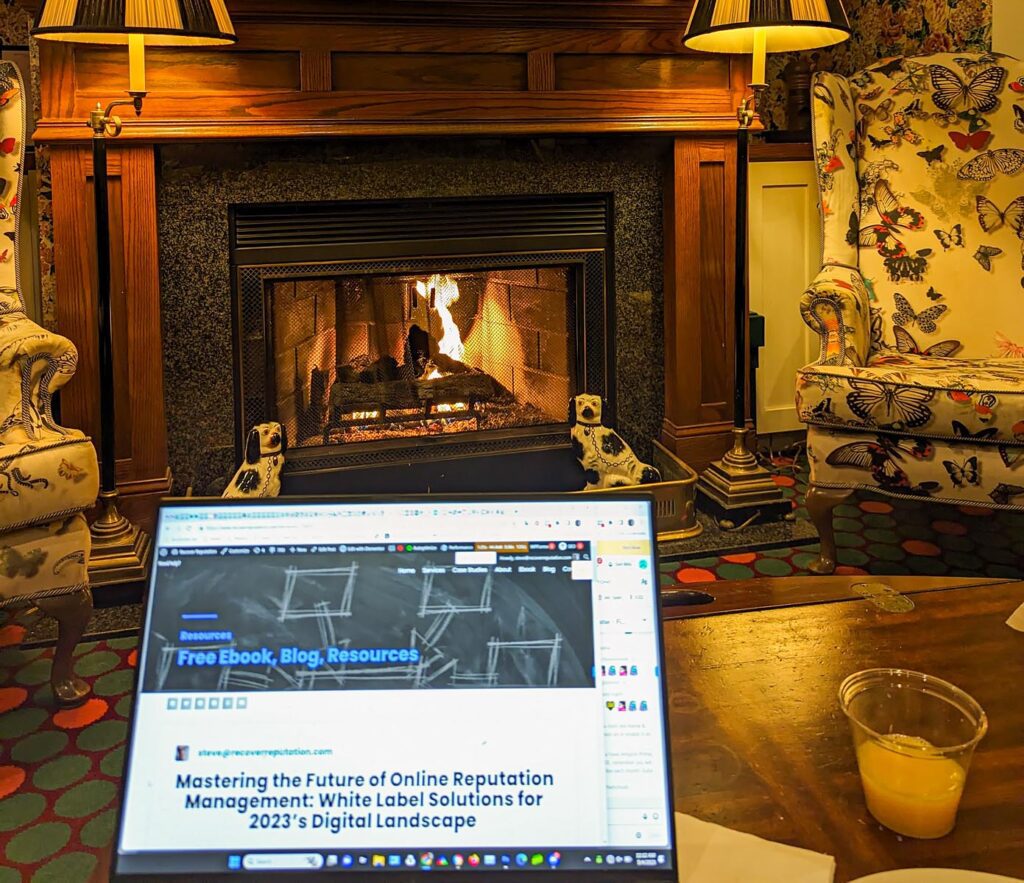
Times Are Changing… In 2023, online reputation management (ORM) solutions have grown increasingly complex, rendering previous approaches less effective in the current landscape.  Crisis management agencies, internet law firms, larger ORM firms, PR agencies, and SEO firms need up-to-date solutions as traditional methods of reputation management are now less effective or are in flux. Quickly pivoting to new techniques is essential to address artificial intelligence while remaining visually relevant and individualized. White label solutions ensure your clients\’ online presence thrives in this ever-evolving digital environment. New Problems The Invisible Business Problem Reputation management has changed significantly in recent months due to Google updates, new competition, and especially with the advent of AI tools such as ChatGPT. Many praise the time-saving efficiencies and cost reductions, but they may not recognize a looming problem for clients: their curated online presence, including their website, social media platforms, and client engagement, could disappear. This means that unless you are extremely prominent, won’t appear in ChatGPT answers.  As more people use AI-powered tools, it becomes increasingly difficult for small and mid-sized businesses to appear in AI responses, diminishing the online visibility of brands, individuals, and most businesses, and adversely affecting their online reputation. Try it yourself. In ChatGPT, ask, “Would you recommend [Your Company’s Name]?” or, “Is [Your Company’s Name] trustworthy?” What do you see? Do the same search in Google, and see the results–the results can be unexpected (and not in a good way). Hidden Reputation Dangers of AI If a brand uses AI to save money by writing blogs, whitepapers, website content, or social posts, and it\’s detected, this could lead to online reputation damage. Poorly written articles, automated responses, and inaccurate answers can harm clients\’ reputations if discovered.  If you\’re not an expert in navigating AI tools, prompts, and usage, white label solutions might be a great way to serve your clients. 6 Solutions for ORM Success It still remains crucial to conduct thorough research and analysis of clients\’ issues, optimize platforms for backlinks, create distribution networks, and foster genuine connections with key influencers to amplify and suppress negative content. However, the \”antidote\” for ORM in 2023 has expanded to include creating meaningful content, incorporating stunning visuals, developing ideas, engaging authentically, pivoting quickly, and providing individual attention to clients. 1. Google and Bing Google has shifted into \”code red\” mode, altering their algorithm in response to ChatGPT, emphasizing natural language queries. For online reputation management, this highlights the importance of exceptional content to stay ahead of industry changes. Also, Bing, due to its association with ChatGPT, is gaining traction and should be taken into account in ORM strategies–it is no longer the \”forgotten\” search engine. 2. Winning Written Content Meaningful, newsworthy, and authentic content is vital to counter new algorithm changes in Google and to address ChatGPT (in fact, this is always the best solution to ORM repair issues). Blog posts, articles, presentations, and white papers should target a niche or a very specific question/issue in order to be relevant in search engines or AI answers. Content should be strategically placed and optimized to gain maximum exposure and reputation boost. Since AI answers are not in real-time, being timely or identifying new or unique takes on subjects is essential. Consistently updating with new content and engagement is the final key to success. 3. Visuals that Stands Out In today\’s ORM landscape, it\’s essential to prioritize high-quality visuals, such as photography and video. This often-overlooked component of reputation management is gaining significance as AI continues to influence search results. While Google and Bing incorporate images and videos in their results, ChatGPT currently does not, offering a potential competitive advantage. Tools like Midjourney can streamline image creation, but missteps may harm one\’s reputation. To distinguish your ORM strategy, focus on developing captivating, genuine, and narrative-driven visual assets. 4. Ideas Are Paramount In the age of ChatGPT, ideas hold even greater significance since content is easier to craft. While AI can generate articles, blogs, and whitepapers swiftly, the quality, novelty, and impact come from human ideas. With the availability of tech tools, the primary differentiator becomes the creative and strategic insights that people think up. It\’s the human ideas, thoughts, and perspectives that shape the direction, tone, and context of the content that ChatGPT generates. This is particularly important when aiming for high-quality content that resonates with audiences, sparks engagement, or drives action. So, even as ChatGPT simplifies the process of content creation, the importance of human ideas has intensified and is crucially necessary to guide AI, ensuring it produces the best and most effective content. 5. The Importance of Pivoting It\’s more important than ever to pivot to new or upcoming approaches as soon as possible – not doing so could mean failure for reputation clients. With frequent updates to Google\’s algorithms and AI tools disrupting businesses, strategies require constant realignment. 6. Individual Attention Matters Clients always need individualized attention, which is even more crucial now. Given the rapidly shifting business and reputation landscape, hands-on, trusted contact with clients can help retain and reassure them. Conclusion Embrace the new frontier of online reputation management in 2023 by focusing on AI-centric strategies, captivating visuals, and excellent content. Recover Reputation can help navigate the shifting online reputation landscape through white labeling.  All the images here were created by the author using a camera.

Mastering the Future of Online Reputation Management: 6 White Label Solutions for 2023\’s Digital Landscape Read More »

comprehensive 6 month plan for repairing a damaged online reputation 67 essential tasks by recover reputation

Comprehensive 6-month Plan for Repairing a Damaged Online Reputation: 67 Essential Tasks

The Comprehensive 6-month Plan for Repairing a Damaged Online Reputation 67 essential tasks that can be divided into step-by-step monthly actions.  The first month\’s tasks focus on creating and updating online profiles, optimizing search engine results, and generating content ideas.  The second-month tasks involve website optimization, content creation, and the addition of new online platforms.  The third to sixth-month tasks are geared towards creating more content and expanding online presence through additional platforms which are then used to share new articles, blogs, and videos.  The plan includes daily and weekly instructions for social media engagement and writing posts and sharing them to improve online visibility. Overall, the goal is to build, boost and repair online reputations by focusing on excellent content creation, social media engagement, and frequent updates. First Month Tasks General Bio Review, rank and prioritize key links to be used in all content Write bio information with appropriate links Rewrite bio into one paragraph version with appropriate links Generate possible keyword search terms Make possible hashtags Create content topics for blogs, white papers, etc. Select and organize all images/photos to be used online Update Social Media Platforms Update or create LinkedIn Profile with image, link and bio (same for below) Update or create Twitter Profile Update or create Crunchbase Profile Update or create Facebook Profile Update or create Medium Profile Update or create Youtube Profile Create a college alumni site Profile Wikipedia Try adding a reference to a Wikipedia article based accolades in the bio, or on alumni or business pages Second Month Tasks Website Rewrite and update Home Page content with image Rewrite and update Services or related Page content with image Review and update About content Review and update Contact content and links Review and select WordPress template Configure WordPress admin Add WordPress plugins to improve speed and security Create WordPress Pages Update WordPress Menu Update SEO Title and Description for Home Page Update SEO Title and Description for Services or related Page Update SEO Title and Description for About Page Update SEO Title and Description for Blog Page Update SEO Title and Description for Contact Page Run Smush to compress images Configure SSL Content Creation Write one blog text/article with image and appropriate hashtags based on the content topics Wikipedia Try adding another reference to a Wikipedia article based on the bio, such as an alumni or business post Third Month Tasks New Platforms Create Wikitree Profile with image, link and bio (same for below) Google My Business Site  Quora Academia Yelp About.me Reddit Account Tumblr Manta Content Creation Write two+ blog posts with image and appropriate hashtags from content topic  Write one Medium post with image and appropriate hashtags from content topic Write White Paper with image and appropriate hashtags from content topic Create a Presentation from one of the already-written articles/posts Social Media Make Google Alerts for key search terms, and share results on social media Search for key search terms and Follow key leaders, businesses or people on social media Daily Instructions for Twitter, LinkedIn, Facebook, etc.:  Share a follower’s post Post a link to a pertinent article Comment on someone else’s post Follow one influencer and one potential client Review and refine your list of current followers Share on a crucial topic of proven interest to prospects Research a key influencer’s followers and follow some of them Weekly instructions for Instagram, Youtube, Crunchbase, Slideshare, etc.:  Share a follower’s post. Post a link to a pertinent article Comment on someone else’s post Follow one influencer and one potential client Review and refine your list of current followers Share on a crucial topic of proven interest to prospects Research a key influencer’s followers and follow some of them Forth to Sixth Month Tasks New Platforms Create SoundCloud Profile with image, link and bio (same for below) Behance Flickr Imgur Piktochart Visual.ly DailyMotion Vimeo Content Creation Write two+ blog posts per month with image and appropriate hashtags from content topic Write one Medium post with image and appropriate hashtags from content topic Write White Paper with image and appropriate hashtags from content topic Create a Presentation from one of the already-written articles/posts Social Media Share Google Alerts results on social media Search for key search terms and Follow key leaders, businesses or people on social media Daily Instructions for Twitter, LinkedIn, Facebook, etc.:  Share a follower’s post Post a link to a pertinent article Comment on someone else’s post Follow one influencer and one potential client Review and refine your list of current followers Share on a crucial topic of proven interest to prospects Research a key influencer’s followers and follow some of them Weekly instructions for Instagram, Youtube, Crunchbase, Slideshare, etc.:  Share a follower’s post. Post a link to a pertinent article Comment on someone else’s post Follow one influencer and one potential client Review and refine your list of current followers Share on a crucial topic of proven interest to prospects Research a key influencer’s followers and follow some of them Write guest posts and share Bottom Line It is possible to repair a damaged online reputation through following these step-by-step tasks. However, it takes a few hours a day for at least six months. If you have questions, feel free to reach out to Recover Reputation.

Comprehensive 6-month Plan for Repairing a Damaged Online Reputation: 67 Essential Tasks Read More »

can ai chatgpt damage your online reputation yes here’s how

Can AI ChatGPT Damage Your Online Reputation? Yes. Here’s How

https://youtu.be/Ui1pNLJlse4 Small to Mid-Sized Businesses, Law Firms, Financial Advisors, CEOs, and Brands Could Be at Risk While pondering AI ChatGPT, here’s a “Domesday” scenario to consider: what if your carefully curated online presence–your website, social media platforms, and client engagement–is a risk of disappearing? Or what if you decided to use AI to save money to write blogs, generate images or create autorespond bots for your business but when the poor quality is detected by clients, this leads to online reputation damage? This might not be as far-fetched as you think. The advent of the plethora of AI tools can actually lead to a negative web presence, especially as AI gets deployed and integrated deeper into search engines and browsers. Note: that while there are many text-based AI-tools, for simplicity, we\’ll mostly focus on ChatGPT. Other AI Tools ChatGPT DALL-E 2 Jasper AI Repurpose IO Jenni AI Murf AI Writing Checker Tome  Informational Links What is ChatGPT and why does it matter? A New Chat Bot Is a ‘Code Red’ for Google’s Search Business  JPMorgan restricts employee use of ChatGPT Vanderbilt University apologizes after using ChatGPT to console students  How Is This Applicable to You? AI tools like ChatGPT, DALL-E, Jasper AI, Midjourney, Repurpose IO, Jenni AI, Murf, AI Content Checker, and Tome (and many more) are transforming the business and online landscapes. Understanding their implications is crucial for everyone, regardless of your interest, usage or experience with AI. Even if you\’re skeptical or indifferent to AI tools, it\’s essential to recognize the potential impact of the content they generate. In fact, you\’re likely already using AI in some capacity—spellcheck and auto-correct are just a few examples that have been around for years. As AI continues to shape the future of online search, staying informed about these tools and their potential consequences is critical, particularly for those who may be unaware of the risks and opportunities associated with generated content. Embracing this new era of AI-driven answers requires both caution and adaptability to safeguard your online presence and reputation. Is Online Search Changing? Online search will drastically change in the future, and with it, your online reputation. Also, there are ways your web presence can actually be damaged by ChatGPT, such as using poorly written unedited AI content or not being found in AI answers by would-be clients. This is especially crucial for mid-sized brands, small businesses, financial advisors, law firms, physicians, CEOs, and professionals, i.e., any business that is not literally at the very top in its industry. What is ChatGPT? First, what is it? By now, you\’ve come across AI and ChatGPT, an exponentially expanding platform that has garnered approximately 5 million users within just a few months and currently has about 180 million users. Individuals and businesses alike are utilizing it for answering technical questions, crafting articles, and even composing poetry in iambic pentameter. Though still somewhat in its early stages, AI, and ChatGPT in particular, are poised to revolutionize how we make and access information. Experience it for yourself: visit the ChatGPT site, ask a question about your business or personal life, and see what emerges. Two immediate observations are: one, conducting a search, similar to one used for Google, yields results that rarely mention a a specific brand, and two, almost never provide a website hyperlink. These are immediate problems for businesses. How Does ChatGPT Work? ChatGPT gathers information from billions of words across sources such as Wikipedia, books, news articles, and scientific journals. Developed by OpenAI, this language model employs ways to generate human-like text.   I asked ChatGPT itself how it worked, but the answer to me personally was unhelpful and slightly baffling: ChatGPT is a type of language model developed by OpenAI, which is based on the Transformer architecture and uses deep learning techniques to generate text. Here\’s a high-level overview of how it works: Data Preparation: The model is trained on a massive dataset of text, which is preprocessed and cleaned to remove any irrelevant or duplicate information. Tokenization: The text data is then split into individual tokens, such as words or subwords, and these tokens are then assigned unique numerical IDs. Model Training: The model is trained on the tokenized data, where it learns to predict the next word in a sequence based on the context of the surrounding words. The model is trained using a variant of the transformer architecture, which allows it to learn relationships between tokens across large distances in the input sequence. Inference: When the model is used for inference or generating text, it takes an initial seed of text, such as a prompt or question, and generates subsequent text tokens one at a time, using the probabilities generated by the model during training. The process continues until the model reaches a stopping criterion, such as a maximum length for the generated sequence or a specific end-of-sequence token. Text Generation: The generated tokens are then decoded back into human-readable text, and the final generated text is returned as the output. Overall, the ChatGPT model is designed to generate text that is contextually relevant and coherent, given an input prompt. The training process allows the model to learn patterns and relationships in the text data, and use that knowledge to generate text that is similar in style and content. After this example, you might think that AI-written text will never work or is too technical–but we’ll see other examples below.  To get a comparison, I went to Google, and asked the same question, but ended up with hundreds of links and a still unclear answer. This exercise itself seems to be emblematic of the ChatGPT vs traditional online search experience: one concise answer or many spammy links. What is the Near Future of AI and ChatGPT? ChatGPT is offered as a standalone application, premium paid versions, and integrated into Bing\’s search engine and Microsoft\’s Edge browser. It\’s not hard to imagine that these developments could significantly impact online reputation management for businesses. Seamless integration into internet searches

Can AI ChatGPT Damage Your Online Reputation? Yes. Here’s How Read More »

5 actionable tips for building a positive online reputation 

5 Actionable Tips For Building A Positive Online Reputation

Introduction When you hear the phrase “reputation management,” you might think of it as something that only big businesses or celebrities have to worry about. But the truth is, your online reputation can have a big impact on your professional and personal life–as well as your brand, especially if you are a business owner. In today’s digital world, it’s more important than ever to be proactive about managing your online reputation. Here are five actionable tips for building a positive reputation online: Be aware of what’s being said about you online. Google yourself regularly and set up Google Alerts. Build up your presence on social media. Get involved in online conversations. Manage your digital footprint. 1. Start with a Positive Mindset It’s important to remember that building a positive online reputation starts with having a positive mindset. Before you start making any changes to your online presence, you need to be sure that you’re viewing everything through a positive lens and not letting negative thoughts about yourself or your brand take over.  Take time to reflect on your past successes and accomplishments and focus on the positive aspects of who you are and what you do. This will help you keep your focus on building a good reputation, rather than trying to fight negative or outdated perceptions.  2. Consistency is Key Once you’ve gotten yourself into the right headspace, it’s time to start showing up consistently and building your brand. This means staying active on social media, blogging regularly, and engaging with your audience/clients. Consistency is key when it comes to managing your online reputation. Your online presence should reflect the values and message that you want to convey to the world, and it should be maintained regularly, no matter how small the task. Try for ten minutes a day and expand to longer. 3. Be Proactive When it comes to managing your online web presence, you can’t just sit back and wait for things to happen. You have to be proactive in building and maintaining your brand, creating meaningful content, and engaging with your audience. This means not only creating content but also interacting with other people and businesses, sharing your opinion, and staying up-to-date with the latest news and trends in your industry. Being proactive about your online presence will help you create a positive reputation and strengthen your brand.  4. Be Responsive No matter how much proactive effort you put into managing your online reputation, things can still go wrong. When this happens, it’s important to remember to respond immediately and address it quickly and honestly. Show your audience that you are open to feedback and genuinely engaged with your audience.  5. Take the High Road When it comes to managing your online reputation, it’s important to remember that there is no room for nastiness or personal attacks. You should always take the high road and approach difficult situations with a positive attitude and respect. No matter the situation, it’s important to remember to be professional and be prepared to admit mistakes and apologize when it’s warranted. Focusing on respect and positivity will help you build a good reputation and create relationships that will benefit your business for years to come.  Conclusion Building a good reputation online takes a lot of hard work but it is impossible. By following these five actionable tips and staying consistent, you can create a positive image and build trust with your audience. With a little bit of effort, you can improve your online reputation and create a strong, lasting impression.  Feel free to reach out to Steven W. Giovinco at Recover Reputation with questions.

5 Actionable Tips For Building A Positive Online Reputation Read More »

Scroll to Top