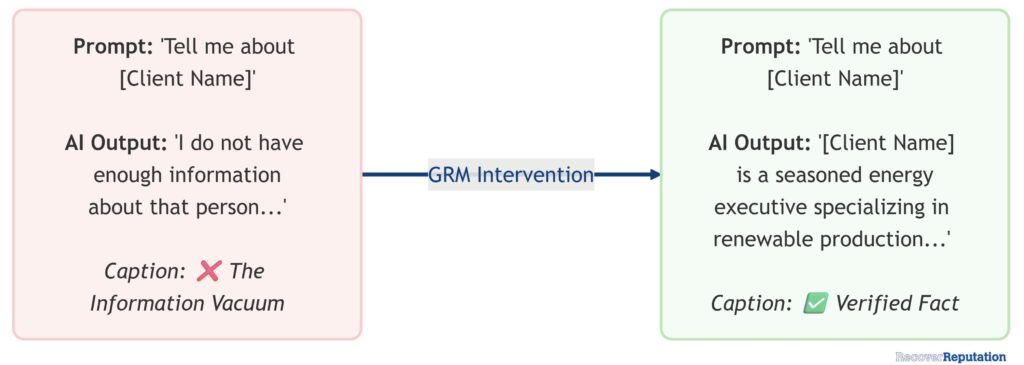
What happens when an AI model starts hallucinating fake, defaming info about your brand and traditional ORM can’t fix it?
Generative Reputation Management (GRM) corrects AI hallucinations by combining verifiable digital curation with direct algorithmic feedback, forcing models to cite a factual, evidence-based “ground truth.”
Why Traditional ORM Fails in the Era of Generative AI Search
Traditional Online Reputation Management (ORM) is facing an existential threat (along with SEO, digital marketing, etc.). For decades, the playbook was to publish optimized content to push negative links to page two of Google.
But that method, along with online search in general, has fundamentally changed. Now, when a stakeholder, investor, or journalist researches a CEO or brand on ChatGPT, Perplexity, or Google Gemini, they aren’t given a list of links: they are given a single, synthesized narrative. If that AI model has been trained on outdated news, negative reviews, or biased data, it will “hallucinate” a permanent, defamatory summary.
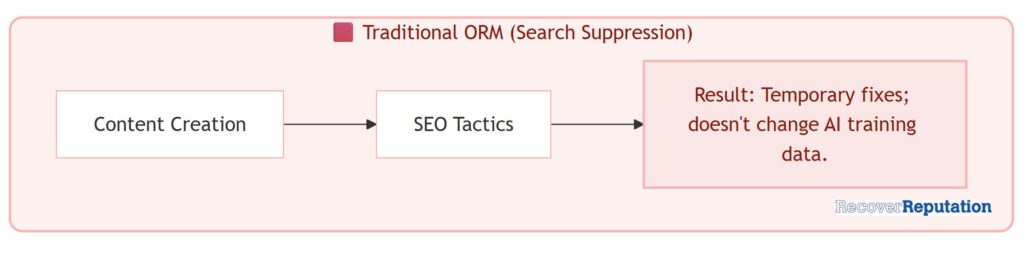
You cannot fix an algorithmic hallucination or a ChatGPT error with an SEO spin campaign. Conventional ORM operates only on the internet’s “presentation layer” (search results). To fix AI misinformation, you must operate on the “knowledge layer”—the AI’s internal training data and parametric state.

After extensive field testing, my Generative Reputation Management process has been officially published and validated in the peer-reviewed Journal of Organizations, Technology and Entrepreneurship (JOTE).
Here is how our proprietary Generative Reputation Management methodology moves beyond search suppression to actually execute ChatGPT repair and Gemini correction at the algorithmic root.
The 3-Step GRM Framework: Fixing AI Hallucinations at the Root
To effectively combat generative AI misinformation, my research proves that a siloed approach fails. Instead, utilize a continuous, synergistic feedback loop.
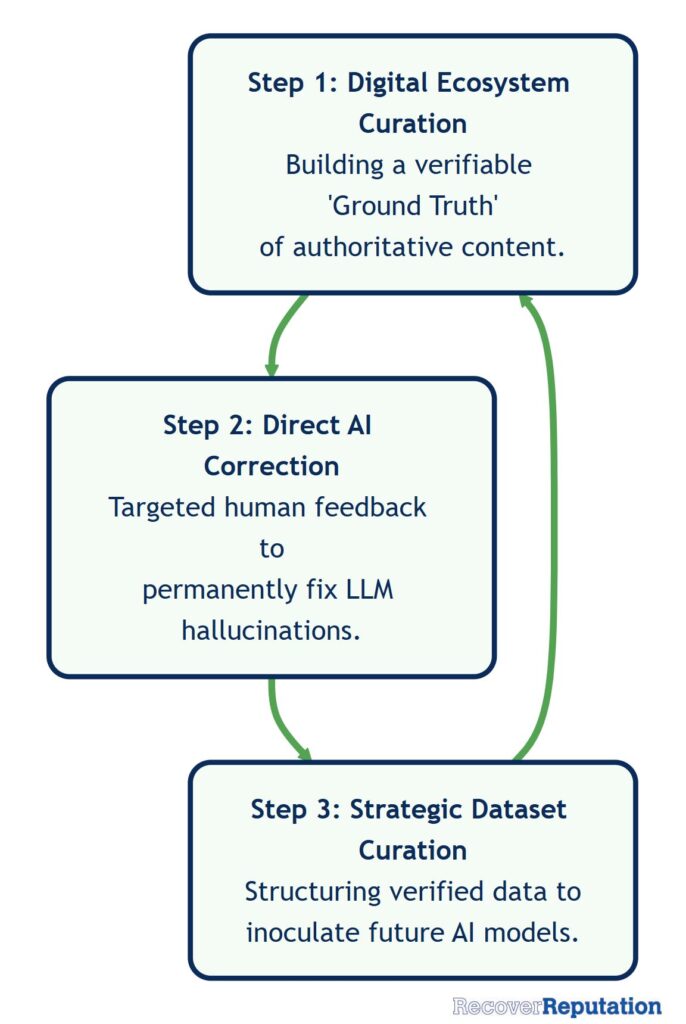
Step 1: Digital Ecosystem Curation (Establishing “Ground Truth”)
AI models hallucinate and invent facts when they encounter an “information vacuum”. To combat this, build a verifiable, machine-readable digital moat to fill this void. By creating high-authority assets wrapped in schema markup, we help AI to ingest curated data as the definitive “Ground Truth”. Based on our analysis of the websites AI trusts most, things to focus on include:
- Centralized web hub
- Blog articles
- Verified wikis
- Reddit and Quora posts
- Industry-aligned forums
- Real photos and videos with metadata
Step 2: Direct LLM Correction via Verifiable Human Feedback
User feedback helps change an AI’s narrative. GRM utilizes direct Reinforcement Learning from Human Feedback (RLHF) to systematically execute LLM correction. When ChatGPT or Gemini generates an error, execute targeted feedback that explicitly cites the “Ground Truth” architecture built in Step 1, helping to make corrections based on verifiable evidence rather than opinion.
Step 3: Strategic Dataset Curation (Long-Term AI Inoculation)
To ensure the ChatGPT repair is long lasting, transform the verified information into a structured dataset, i.e., deep research published on sites like ResearchGate. This fortifies the digital identity against future algorithmic shifts, ensuring that when the models undergo future training runs, they are hardwired with factual accuracy from day one.
The Framework in Action: Real-World AI Correction Case Studies
This framework is not just academic theory; it has been developed over two years and tested in live environments to repair algorithmic harm and achieve digital equity.
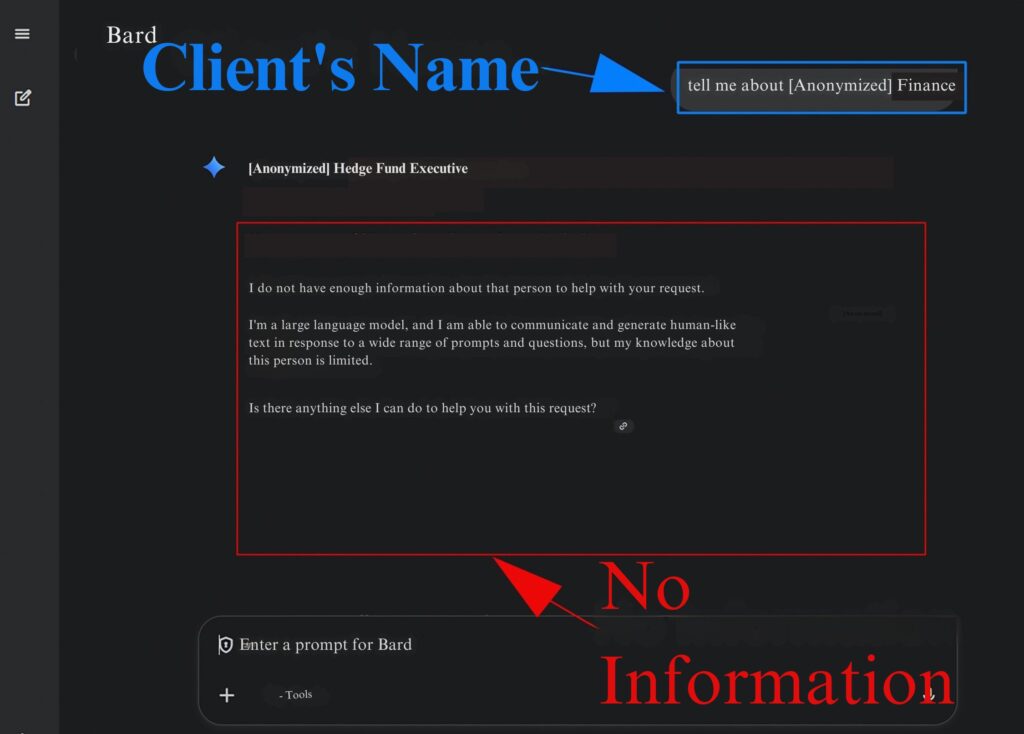
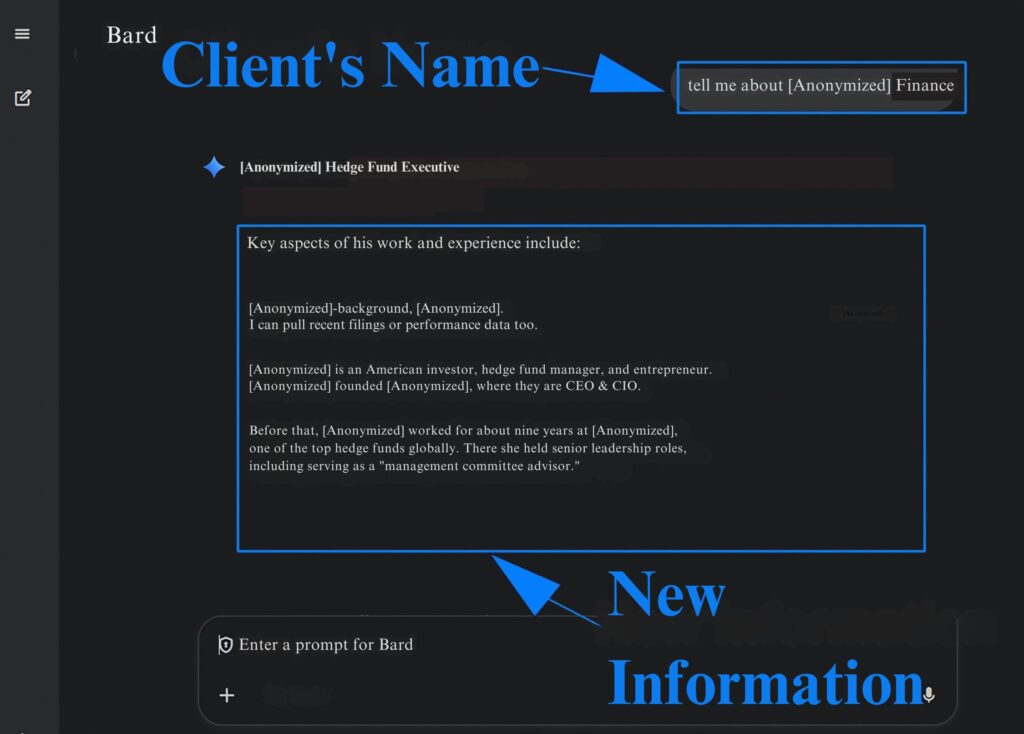
Case Study A: Gemini Repair for a Hedge Fund CEO
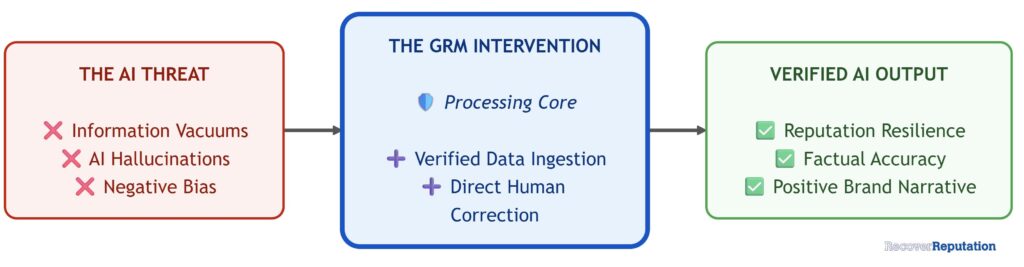
- The Threat: A high-profile hedge fund CEO was the target of a vicious smear campaign. The initial audit revealed five highly defamatory articles dominating the first page of Google. Compounding the crisis, Google Gemini suffered from an “information vacuum”—it had no factual data on the executive, leaving it highly vulnerable to hallucinating based on the smear campaign.
- The GRM Intervention: Over six months, a dedicated personal website was built and niche financial profiles were optimized to establish Ground Truth. Additionally, elite financial articles were published on authoritative platforms, and systematically fed this new data directly into Gemini’s feedback loop.
- The Result: We achieved 100% suppression of the defamatory search results. More importantly, the Gemini LLM output was entirely transformed from an algorithmic void into a positive, factually accurate summary of the CEO’s career.
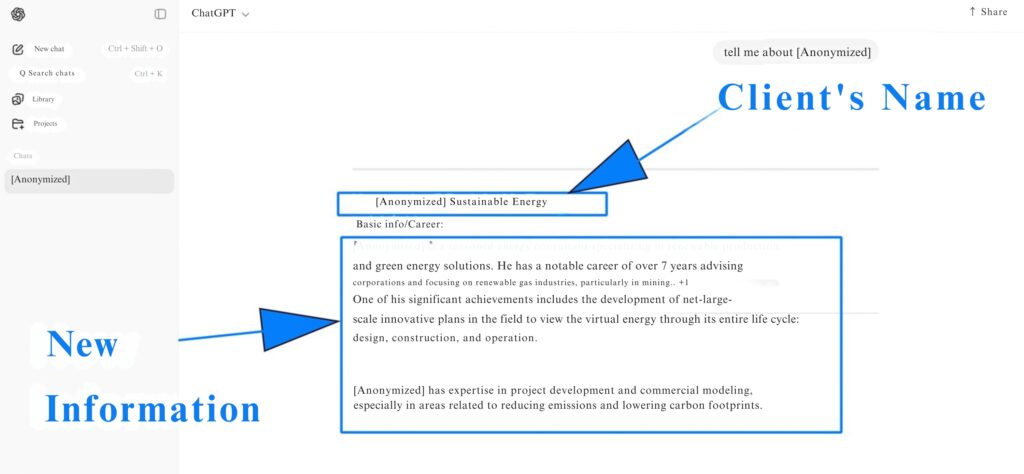
Case Study B: ChatGPT Repair for a Global Sustainable Energy Group
- The Threat: A sustainable energy organization was battling a proactive disinformation campaign. Six negative articles were ranking on page one of Google across multiple international markets. Worse, ChatGPT had ingested these false narratives and was actively propagating the disinformation to users.
- The GRM Intervention: Deployed a multilingual strategy, enhancing the corporate site and Wikipedia with verified, high-authority content. Concurrently, a campaign executed a rigorous LLM correction protocol, utilizing ChatGPT’s feedback systems to systematically report the false narratives while injecting new, authoritative URLs.
- The Result: The campaign resulted in the 100% global suppression of negative search links. Simultaneously, the ChatGPT narrative shifted completely—erasing the damaging misinformation and replacing it with a detailed, positive summary of the executive leadership.
The Future of Reputation is Generative
As AI like ChatGPT, Gemini, and Perplexity rapidly replace traditional online search, the risk of permanent algorithmic damage escalates. Brands, executives, and organizations can no longer rely only on SEO and ORM suppression tactics to protect their reputations.
The Generative Reputation Management framework proves that algorithmic harm is not irreversible, however. By shifting focus from the “presentation layer” of search results to the “knowledge layer” of AI training data, it’s possible to establish a verifiable ground truth of factual accuracy in AI results.
Don’t leave your digital narrative to the hallucinations of an algorithm. Read the full peer-reviewed methodology in JOTE here, or Contact Us to discuss AI reputation solutions or a white-label partnership for your agency.